

Polypropylene pipes for drainage networks
Learn about polypropylene pipes for drainage networks, their applications and advantages, demonstrating why this material is the future choice for construction projects. From its application in residential systems to its role in industrial environments, polypropylene has marked a before and after in the sector.

The cities’ drainage and sanitation network plays a fundamental role in promoting public health, environmental protection and the general welfare of our cities. Their proper maintenance and continuous investment in their improvement are essential to ensure their long-term efficiency and sustainability.
Characteristics of ABN polypropylene pipes for sewage systems
According to the Technical Building Code (CTE), all buildings must have adequate means to extract the wastewater generated in them. This is precisely what the network of drainage pipes is responsible for. They carry the water to the outside without causing any nuisance, damp, noise or odour to the occupants of the dwellings. In general, this type of pipes are used for:
- Rainwater drainage: Rainwater is channelled from the roofs and waterproofed surfaces of buildings into the storm drainage system in the pipe network. This helps prevent flooding and structural damage caused by water accumulation on roofs and surrounding areas.
- Sewage disposal: Sewage pipes carry wastewater, such as from toilets, sinks, showers and other drains, from inside the building to the municipal sewerage system or to a wastewater treatment system in the case of stand-alone systems, such as septic tanks.
- Low and high temperature wastewater disposal: Due to their temperature resistance, PP pipes are suitable for high and low temperature wastewater disposal in laboratories, laundries, kitchens, kitchens, autoclaves and industrial drains.
Characteristics of ABN polypropylene pipes for sewage systems
Polypropylene (PP) pipes for sewage networks have a number of advantages that make them preferred in many construction and sanitation applications.
Soundproof drainage systems
Fire resistance
The reaction to fire classification B-s1,d0 is a European specification describing the fire performance of building materials according to EN 13501-1:2019. Classification according to the fire performance of construction products and building elements. Part 1: Classification based on data obtained from reaction to fire tests.
This classification is divided into several parts that indicate:
- B: Refers to the classification of the material in terms of its reaction to fire, where “A” indicates non-combustible materials and “B” refers to materials with very limited contribution to fire. In this case, “B” means that the material (in this context, PPR pipes) has a very good fire performance, with limited combustibility.
- s1: Indicates smoke production during combustion. “s1” means that the material produces little smoke when burning, which is important for visibility and toxicity in case of fire.
- d0: Refers to the production of flaming droplets or flaming particles while the material is burning. “d0” means that the material does not produce flaming droplets, which is crucial to prevent the spread of fire through the fall of ignited particles.
Polypropylene pipes complying with the B-s1,d0 classification are, therefore, materials with a very favorable reaction to fire, ideal for applications where fire safety is a priority. Their ability to limit smoke generation and prevent the production of flaming droplets or particles helps to minimize the risks associated with the evacuation of people and the spread of fire.
In evacuation networks, the use of polypropylene pipes that meet this classification means that, in addition to their advantages in terms of corrosion resistance, durability and hydraulic efficiency, they also contribute significantly to the fire safety of the facilities. This is especially relevant in residential, commercial and industrial buildings where structural integrity and occupant safety in the event of fire are critical.
Reduced surface roughness
Polypropylene pipes for drainage networks are characterized by an outstanding property in their design: they have a remarkably smooth internal surface, which significantly reduces roughness. This essential characteristic promotes a more laminar flow, reducing head losses and increasing hydraulic efficiency. The high precision in the manufacture of these pipes guarantees an internal consistency that is vital to avoid sediment accumulation and bacterial proliferation.
Reduced internal roughness also means less energy demand for pumping liquids, which translates into lower operating costs and a benefit to the environment by reducing energy consumption. This benefit not only increases the long-term efficiency of disposal networks, but also promotes the sustainability of wastewater management systems.
To take full advantage of the efficiency and performance of polypropylene pipes in drainage systems, highlighted by their low internal roughness, an advanced head loss calculation tool has been developed. This tool becomes an invaluable resource for professionals in the sector, allowing accurate estimates of head losses in evacuation networks, thus ensuring optimal design and energy efficiency in the implementation of projects.
Roughness coefficients
ABSOLUTE ROUGHNESS
| MATERIAL | ε(mm) |
|---|---|
| PE, PVC, PPR | 0,0015 |
| GLASS FIBRE REINFORCED POLYESTER | 0,01 |
| STEEL KNURLED TUBE | 0,0024 |
| COPPER PIPES | 0,0015 |
| CEMENT-LINED FOUNDRY IRON | 0,0024 |
| BITUMINOUS COATED FOUNDRY IRON | 0,0024 |
| CENTRIFUGAL FOUNDRY | 0,003 |
| GALVANISED IRON | 0,06-0,24 |
MANNING’S COEFFICIENT
| MATERIAL | n |
|---|---|
| PE, PVC, PPR | 0,006-0,010 |
| GLASS FIBRE REINFORCED POLYESTER | 0,009 |
| IRON | 0,010-0,011 |
| GALVANISED IRON | 0,015-0,017 |
| FOUNDRY | 0,012-0,015 |
| CONCRETE | 0,012-0,017 |
| CONCRETE COATED WITH GUNITE | 0,016-0,022 |
BITUMINOUS COATING | 0,013-0,016 |
ROUGHNESS COEFFICIENT HAZEN – WILLIAMS
| MATERIAL | ε(C) |
|---|---|
| GALVANISED IRON | 0,0015 |
| FOUNDRY IRON | 0,01 |
| PE, PVC, PPR | 0,0024 |
| IRON | 0,0015 |
| CONCRETE | 0,0024 |
| COPPER | 0,0024 |
| DUCTILE FOUNDRY | 0,003 |
Acoustic insulation
Most complaints about noise in buildings stem from problems with the soundproofing of downpipes for water drainage.
En España, el artículo 14 del Documento Básico HR (Protección frente al ruido) del Código Técnico de la Edificación (CTE) advierte que “con la finalidad de limitar el riesgo de molestias a los usuarios de las viviendas, los elementos de las instalaciones reducirán la emisión de ruidos durante su funcionamiento, afectando tanto a la obra nueva como a la obra de rehabilitación y reforma”. Furthermore, for a dwelling, hospital or educational centre, the Basic Document HR of the CTE allows a maximum of 45 dB in the enclosure.
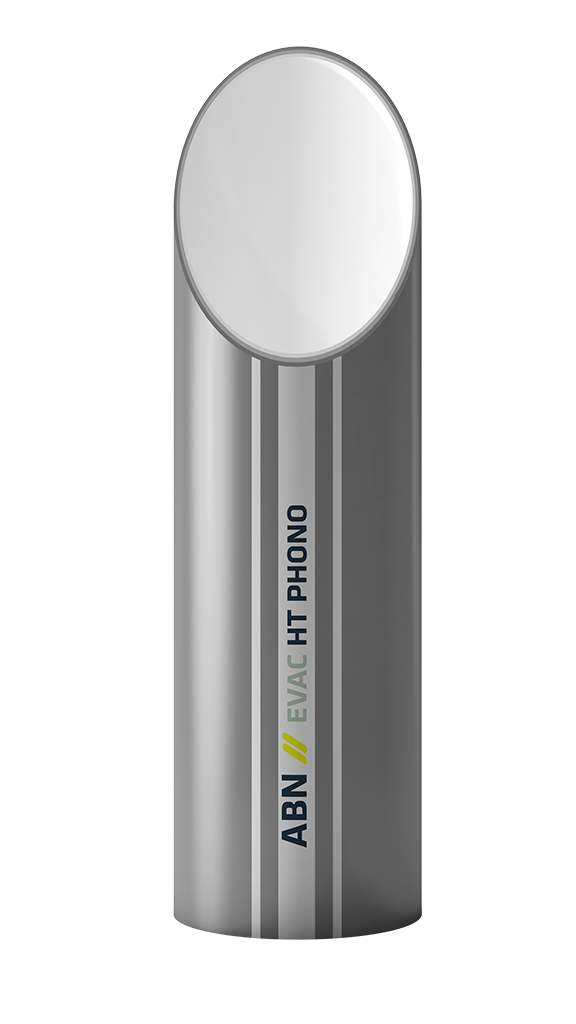
Sound-insulated drainage pipes have been specifically designed to solve fluid drainage problems in pipe networks with the highest demands on noise reduction. A proper soundproof exhaust system is necessary to achieve the acoustic comfort that people demand.
Taking into account the above-mentioned figure, the noise values emitted by soundproof drainage systems are well below the maximum permitted by the CTE, which guarantees a high level of comfort in dwellings and a significant reduction in the nuisance caused by the drainage of fluids.
Thus, noise transmission is much lower compared to metallic pipes, allowing for higher water flow velocities.
Halogen free
Safety in installations and constructions is a constant concern, especially when dealing with materials exposed to possible fires. In this regard, understanding what it means for a pipe to be halogen-free is essential.
Halogens are some elements of group VII A of the periodic table: fluorine, chlorine, bromine, tene and iodine. All of them are so reactive that they are not found free in nature, but always mixed with other elements.
The result of the combustion of halogen materials is a large amount of corrosive, toxic and opaque fumes.
Halogen-free pipes do not contain any of these elements and behave much better in case of fire than PVC (which contains chlorine) and have very similar mechanical characteristics. This is why halogen-free pipes are known as high fire safety pipes.
Chemical resistance
PP polypropylene pipes are distinguished by their outstanding chemical resistance, which makes them compatible with a wide variety of liquids and prevents degradation by chemicals. This feature is crucial for industrial and residential applications where chemical exposure is common. For a detailed evaluation of the chemical compatibility of your pipes, ABN offers the PipeCloud chemical resistance tool, facilitating the proper selection of pipes for each specific project.
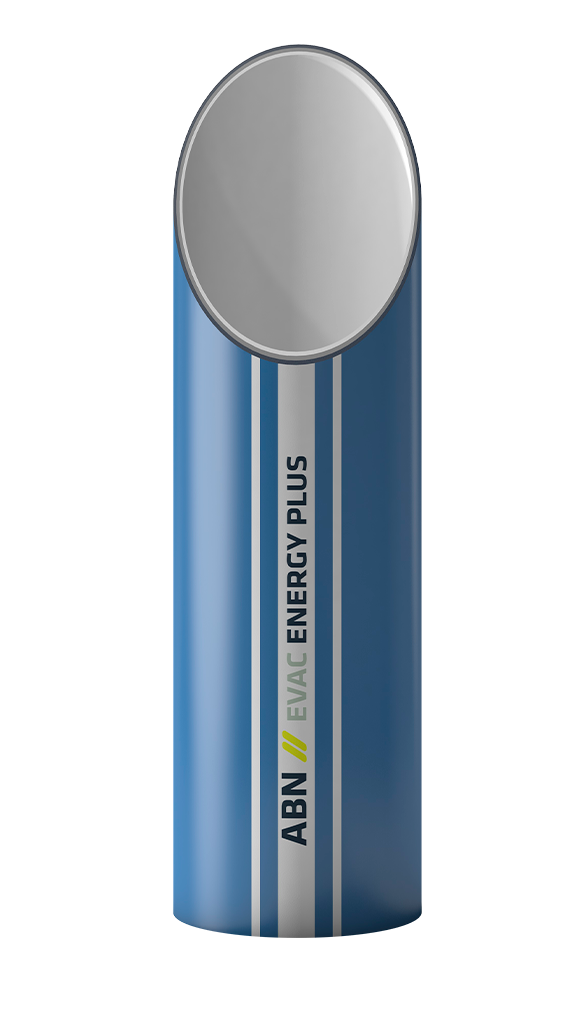
ABN//EVACENERGY PLUS pipes are made of high molecular weight polyolefins and have a non-polar structure, which gives them excellent resistance to chemical agents.
Thanks to their chemical inertness, they are resistant to inorganic acids (hydrochloric, sulfuric, etc.), alkalis, detergents, mineral oils or fermentation products.
They are not altered by seawater, saline or acidic soils, or by urban or industrial discharges.
ABN//EVAC ENERGY PLUS is more resistant to the possible aggression of hard water and withstands chemicals with a pH value between 1 and 14, which includes acidic and alkaline substances, as well as chlorine, fluoride or iron contained in the water.
Easy installation and assembly
Many pipes on the market still use threaded joints, welded or mechanical joints, techniques that, although they have been really useful and functional, have been relegated to the past.
The specialization of materials has allowed the new PP pipes to use elastic joints, which are key to water tightness.
An extra-long cup and a specially designed gasket make the resulting joint totally watertight and reliable, guaranteeing perfect operation of the network even with depressions of 0.5 bar and deformations of more than 30%.
Joint system: elastic joint
Some of the advantages of the elastic joint over previous technologies are:
- It avoids dirt deposits in the joint area and requires little effort for application and relubrication due to its starting angle.
- It is airtight and elastic in case of angle deviation or deformation of the pipe, so it has a higher protection against deformation.
- The elastic seals have an accurate leak profile, which facilitates pipe insertion and prevents loosening of the lip seal.
- It offers further optimization of the outer seal area, thereby providing a clear improvement in surface pressure and angle variation in the cup.
Unlike PVC, polypropylene (PP) does not use adhesives, since its joining system is based on the incorporation of an elastic gasket based on SBR rubber, manufactured according to standard 681-1, which guarantees its watertightness.
The gasket is housed in the casing of the fitting and is completely free to move, which facilitates its placement and removal without leaving any residue, being able to be reintegrated in a new pipe without the need for additional processes.
ABN Polypropylene Piping Systems
ABN/// EVAC Energy plus is a soundproof evacuation pipe made of 3 layers of polypropylene compound, with mineral reinforcement.
ABN/// EVAC ENERGY PLUS has a reaction to fire rating of B-s1, d0 and is halogen-free.
Eco-designed for a circular economy and sustainable construction buildings.

- Outer layer: with high resistance to impact and atmospheric agents. It is also resistant to UV rays.
- Intermediate layer with mineral reinforcement. Extreme shock and vibration absorption. Greater rigidity, safety and stability. Fire resistance without releasing toxic gases.
- Inner layer: with high resistance to hot water, chemicals and abrasion. Ultra-smooth and anti-fouling interior.
Soundproof drainage systems
Benefits of polypropylene pipes for drainage networks
- Increased recyclability: PP is recyclable, making it a more sustainable and environmentally friendly option. This is essential in a world increasingly aware of the importance of the circular economy.
- Temperature resistance: PP systems can withstand temperatures from -20°C to 97°C, ensuring functionality in a wide range of environments and climatic conditions.
- Annular stiffness: With superior annular stiffness (SN>4), PP pipes offer greater resistance to external loads, ensuring their structural integrity over time.
- Improved fire performance: Both sanitation and drainage pipes made of PP and PVC pipes have a reaction to fire classification B-S1, D0, which means that the material has a low smoke production and that when burning no droplets or particles are released that could fall on other elements.
- Halogen-free: PP is a halogen-free material, which means that it does not emit toxic or corrosive gases in the event of fire, protecting both people and the environment.
- Soundproofing: PP pipes are designed to reduce noise, this is achieved thanks to their three-layer structure, with an intermediate layer with mineral reinforcement that achieves excellent absorption against shocks and vibrations, complying with the standards of acoustic protection in buildings. This contributes to the comfort and well-being of the residents.
- Durability and chemical resistance: PP pipes for sanitation and drainage have a high chemical resistance (PH1-PH13), ensuring durability and optimum performance in urban and industrial applications.
Applications of polypropylene pipes for drainage networks
Polypropylene, due to its versatility and resistance, has become a widely used material in various sectors. Here we present an analysis of its multiple applications:
- Wastewater disposal: Polypropylene pipes are ideal for the disposal of domestic and industrial wastewater due to their high resistance to corrosion and chemicals. They allow safe and efficient transport of wastewater from the point of origin to treatment plants or sanitation systems, minimizing the risk of leakage and contamination of soil and groundwater.
- Gravity stormwater drainage: this system uses polypropylene pipes to channel and direct rainwater from roofs, patios and impervious surfaces to drainage systems or infiltration areas. The light weight and ease of joining of these pipes facilitates their installation in systems that rely on gravity for water flow, ensuring efficient evacuation and reducing the risk of flooding.
- Depression stormwater evacuation: Depression or vacuum evacuation systems use polypropylene piping to create a closed, sealed path where rainwater is evacuated by creating a pressure differential. These systems are especially useful in areas where gravity is not sufficient to ensure adequate drainage, such as in flat terrain or subway facilities.
- Aerothermal: Aerothermal uses polypropylene piping in its heating and cooling water distribution systems, harnessing the thermal energy of the outside air. Polypropylene pipes are a popular choice for these systems due to their low thermal conductivity, which helps minimize heat loss and improve energy efficiency.
- Central vacuuming: Central vacuuming systems use polypropylene piping to connect the various vacuum outlets distributed throughout a home or building to a central collection unit. Polypropylene’s resistance to dust accumulation and its durability make it an excellent choice for this type of application, ensuring an efficient and low-maintenance system.
- Ventilation systems: In the ventilation of residential, commercial and industrial spaces, polypropylene pipes are used to transport fresh air and evacuate stale air. Their resistance to corrosion and chemicals, together with their ability to form airtight systems, makes them suitable for maintaining indoor air quality and preventing moisture and mold problems.
Environmental certifications for drainage pipes
To ensure sustainability and low environmental impact, internationally recognised environmental product certifications are also applicable to this type of pipes, such as:
Cradle to Cradle (C2C)
It is a comprehensive solution for evaluating, optimizing and verifying all aspects of product design and manufacturing by assessing product safety, circularity and liability. This label boosts product innovation for the circular economy by providing a framework for designing materials and products that are safe, circular and responsibly manufactured.

Environmental Product Declaration (EDP)
It is a document that provides quantifiable and verifiable information on the environmental impact of a product, as well as technical data on its manufacture, offering the customer truthful and verified information.

In addition, these certifications score against the standards of important product labels that also clarify environmental impact, promoting the use of lower impact materials.
The best environmental seals for certifying sustainability are BREEAM and LEED. Houses and buildings built according to Passvivahus standards reduce heating and cooling needs by 75%, and the remaining energy can easily be covered by renewable energies.