


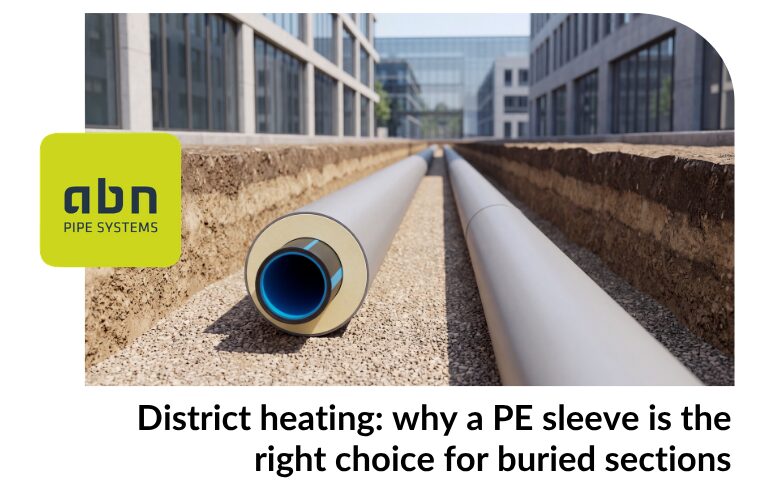
A district heating network with PE piping must be designed to withstand the conditions typical of outdoor and underground installations. In addition to maintaining the fluid’s temperature, the system requires adequate external protection to function in contact with the ground and maintain the integrity of the entire system.
What is required for an underground district heating network?
An underground section of a district heating system must meet two requirements: maintaining the water temperature along its entire length and withstanding ground conditions (moisture, contact with the soil, and mechanical stresses) throughout the system’s service life.
Why the PE shirt is a good fit for district heating
The Insu Plus polyethylene sleeve is designed specifically for these types of applications. It provides a thicker insulating layer, suitable for the temperature fluctuations typical of outdoor and underground environments, along with the strength and watertightness required for sections in contact with the ground.
Criteria for specifying piping
The choice of option should not be treated as a rigid rule, but rather based on an assessment of the conditions of each project: the degree of exposure, the available protection, humidity, weather conditions, and the route. For underground and outdoor sections, the PE jacket is generally the most suitable option; for indoor runs, the aluminum jacket is recommended. In any case, it is advisable to confirm the selection with our technical department.
Conclusion
For district heating projects with underground sections, the Insu Plus PE jacket offers the combination of insulation and durability that these applications require. Tell us about the characteristics of your network, and we’ll help you choose the most suitable configuration.